
How Long Do You Need For An LAX Layover?
How much time do you need for an LAX layover? The honest answer is that a safe LAX layover depends less on the clock and more on your specific flight path. For domestic connections, a minimum of 1.5 to 2 hours is generally safe, while international arrivals require at least 3 hours to clear customs and re-check bags. This guide covers everything you need to know to navigate a connection at Los Angeles International Airport, from efficient terminal transfers to deciding whether you have enough time to explore the city.
The biggest fear for any connecting passenger is missing a flight due to LAX's size and infamous traffic. The airport is not a single, circular terminal; it is a sprawling collection of separate buildings spread over a large area. The distance between your arrival gate and departure gate is the single biggest variable in your connection time.
By the end of this article, you will know exactly how much time you need for your specific connection, how to transfer between terminals efficiently, and what to do with your free time—whether that's relaxing in a lounge or heading to the beach.
Key Takeaways
- Minimum connection time: For domestic-to-domestic connections, a layover of 1.5 to 2 hours is generally safe. For international connections, allow for at least 3 hours to clear customs and re-check bags.
- Terminal distance is the biggest variable: LAX is not a single circular terminal; it's a collection of separate buildings. Transfers between terminals like T4 and TBIT can take significantly longer than transfers within the same terminal.
- The "AirTrain" is your best friend: The automated people mover is the most reliable way to travel between terminals, avoiding the chaotic traffic on the lower loop.
- Exiting the airport is a gamble: To visit Santa Monica or Hollywood, you need a minimum layover of 5-6 hours. The traffic on the 405 and Sepulveda Boulevard can be unpredictable.
- Your gate determines your options: The terminal you arrive in and depart from dictates your best plan. A layover entirely within Terminal 4 is a different experience than one that requires a transfer to Terminal 1.
The Complete Answer: How Long Do You Need for a LAX Layover?
A traveler in the terminal looks at flight information, emphasizing the planning aspect of a layover.
The Golden Rule of Time at LAX
The absolute minimum safe layover for a domestic-to-domestic connection at LAX is 1.5 hours, but 2 hours is strongly recommended for peace of mind. A 1-hour connection is technically possible but extremely risky. Walking from one end of a terminal to another, or waiting for the AirTrain, can consume this entire window.
Your checked bags play a critical role in this calculation. If you have checked luggage, your minimum time must increase significantly. A 1-hour connection does not allow for the time it takes to wait at baggage claim and re-check your bags for the next flight. For this reason, carry-on-only travel is the best strategy for tight connections.
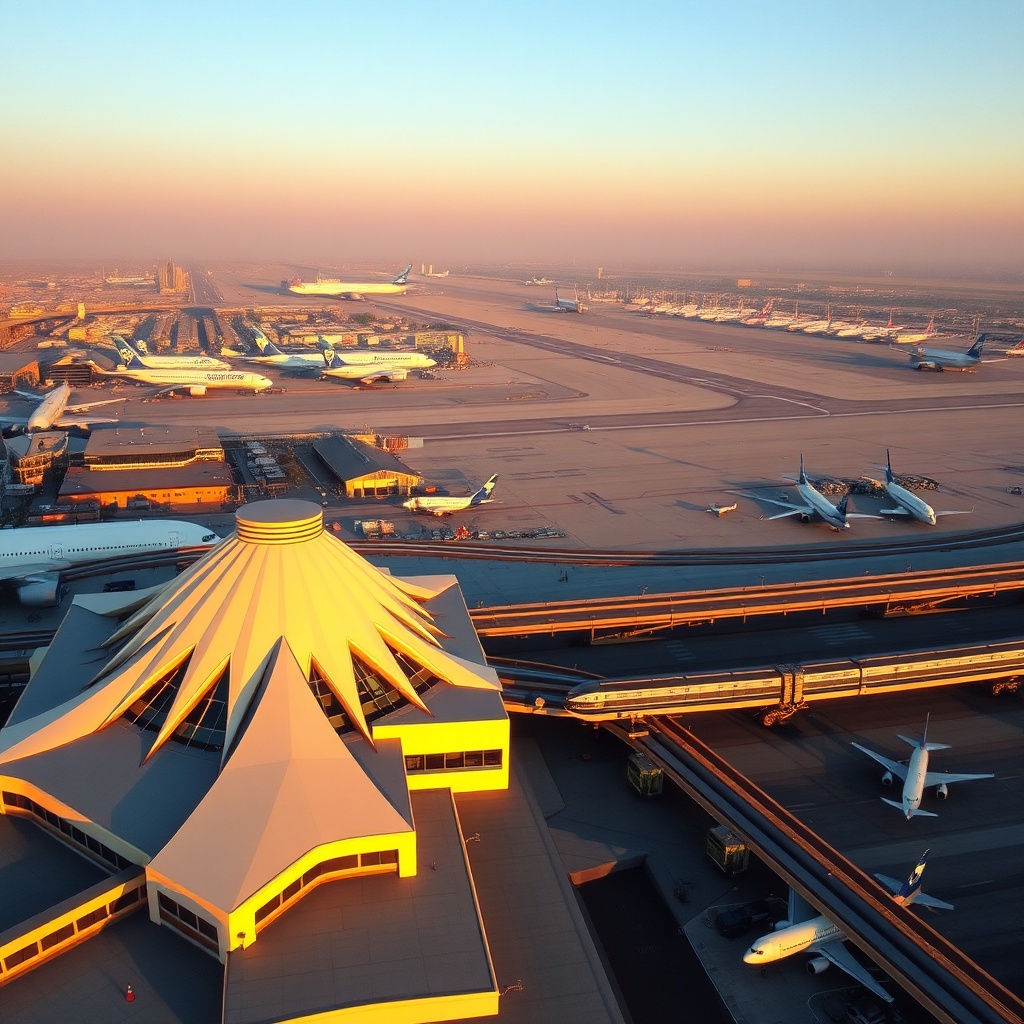
A panoramic shot of the airport's structure, emphasizing the need for time to transfer between terminals.
The International Connection: A Different Beast
Arriving on an international flight requires clearing US Customs and Immigration, which is a separate, time-consuming process. You must deplane, walk to the immigration hall, queue for an officer, and then collect your bags.
If you have a connecting flight, you must collect your bags and re-check them at the airline's counter, even if your final destination is domestic. This is a mandatory step that adds significant time to your connection. A minimum of 3 hours is the standard recommendation for international-to-domestic connections at LAX.
Quick Answer: A 3-hour layover is generally enough for a domestic-to-domestic connection at LAX, even if you need to change terminals. For an international arrival, 3 hours is the absolute minimum needed to clear customs and re-check bags.
A Quick Reference Table for Layover Times
| Connection Type | Minimum Safe Time | Recommended Time | Notes |
|---|---|---|---|
| Domestic to Domestic (Same Terminal) | 1.5 hours | 2 hours | Allows for a restroom break and a coffee. |
| Domestic to Domestic (Different Terminal) | 2 hours | 2.5 hours | Account for AirTrain/walking time. |
| International to Domestic | 3 hours | 3.5 hours | Must clear customs and re-check bags. |
| International to International | 2 hours | 2.5 hours | Must clear customs and re-check bags. |
| Exiting the Airport (e.g., to Santa Monica) | 6 hours | 8 hours | Travel time to/from the city is significant. |
Navigating the Maze: From Arrival Gate to Departure Gate
The AirTrain: Your Strategic Advantage
The AirTrain is an elevated train that loops around the entire airport, connecting all terminals and the parking lots. It is free, runs 24/7, and is the most efficient way to travel between terminals that are not connected by a walkway. This is your best tool for managing a layover time between flights.
Step-by-Step Guide to a Terminal Transfer:
- Deplane: Gather your belongings and exit the aircraft.
- Follow the Signs: Look for the "Connecting Flights" or "AirTrain" signage.
- Find the AirTrain Station: Stations are located on the upper level of each terminal.
- Board the Train: Take the "Terminal" loop train in the direction of your departure terminal.
- Exit and Head to Gate: Follow the signs for your new gate, which will require you to go through a security checkpoint.
The Terminal-to-Terminal Walkway
Terminals 4, 5, 6, 7, and 8 are connected by a series of walkways and moving walkways. This means you can walk between these terminals without exiting security or taking the AirTrain.
The Tom Bradley International Terminal (TBIT) is connected to Terminal 4 via a skybridge, but it is a long walk. Walking is often faster for short hops (e.g., T4 to T5), but the AirTrain is better for longer transfers (e.g., T1 to T8).
Security Re-Check and Time Management
You must always go through security again when you enter a new terminal for your departing flight. This is a key point that travelers often overlook. If you have TSA PreCheck or CLEAR, you can significantly reduce the time spent in the security line.
Always have a 15-minute buffer after you reach your departure gate to account for any unexpected delays. This buffer is essential for managing LAX airport security wait times, which can fluctuate.
The "In-Airport" Layover: Maximizing Your Time Inside LAX
The Best Lounges for a Quiet Escape
If you have a longer layover and prefer to stay inside the airport, LAX airport lounges are your best option. They offer a quiet place to work, free Wi-Fi, complimentary food and drinks, and showers (in some cases).
Major lounges are located throughout the airport. For example, the Star Alliance Lounge is in the Tom Bradley International Terminal, and the Delta Sky Club is in Terminals 2 and 3. Access can be through airline status, a premium credit card, or a day pass, depending on the specific lounge's policy.
Definition: An airport lounge is a private, members-only or paid-access area within an airport terminal that offers comfortable seating, complimentary food and beverages, and often business services like Wi-Fi and printing.
A Guide to LAX Dining: From Quick Bites to Sit-Down Meals
LAX airport food options have improved significantly in recent years. Terminals like T4 and T6 have large food courts with a variety of options, from fast food to sit-down restaurants. You can find iconic LA brands like 800 Degrees Pizza and Umami Burger in several terminals.
If you are short on time, use the mobile ordering apps for many restaurants to skip the line. This is a simple way to get a good meal without jeopardizing your connection.
Unusual Amenities and Hidden Gems
LAX has several amenities that can make a layover more enjoyable. The LAX Museum, located in the Terminal 4 connector, hosts rotating exhibits on aviation history and is free to visit.
If you are traveling with a pet, pet relief areas are located in various terminals. Other amenities include children's play areas, nursing rooms, and free Wi-Fi throughout the airport. These small details can make a big difference during a long wait.
The "Out-and-Back" Layover: Is It Worth Leaving LAX?
Santa Monica: The Classic Choice
Santa Monica is the most popular excursion for a long LAX layover, but it requires a significant time commitment. You need at least 6 hours total to make this trip worthwhile. The logistics involve taking a ride-share or the LAX City Bus Center to the Santa Monica Pier.
Once there, you can walk the pier, visit the aquarium, and enjoy the beach. The experience is classic Southern California, but you must be disciplined about the time to ensure you get back to the airport with enough buffer.
The Getty Center and Other Museums
The Getty Center is a world-class art museum with stunning architecture and gardens. It is another excellent option for a long layover, but the drive up the 405 freeway can take 30-45 minutes each way,