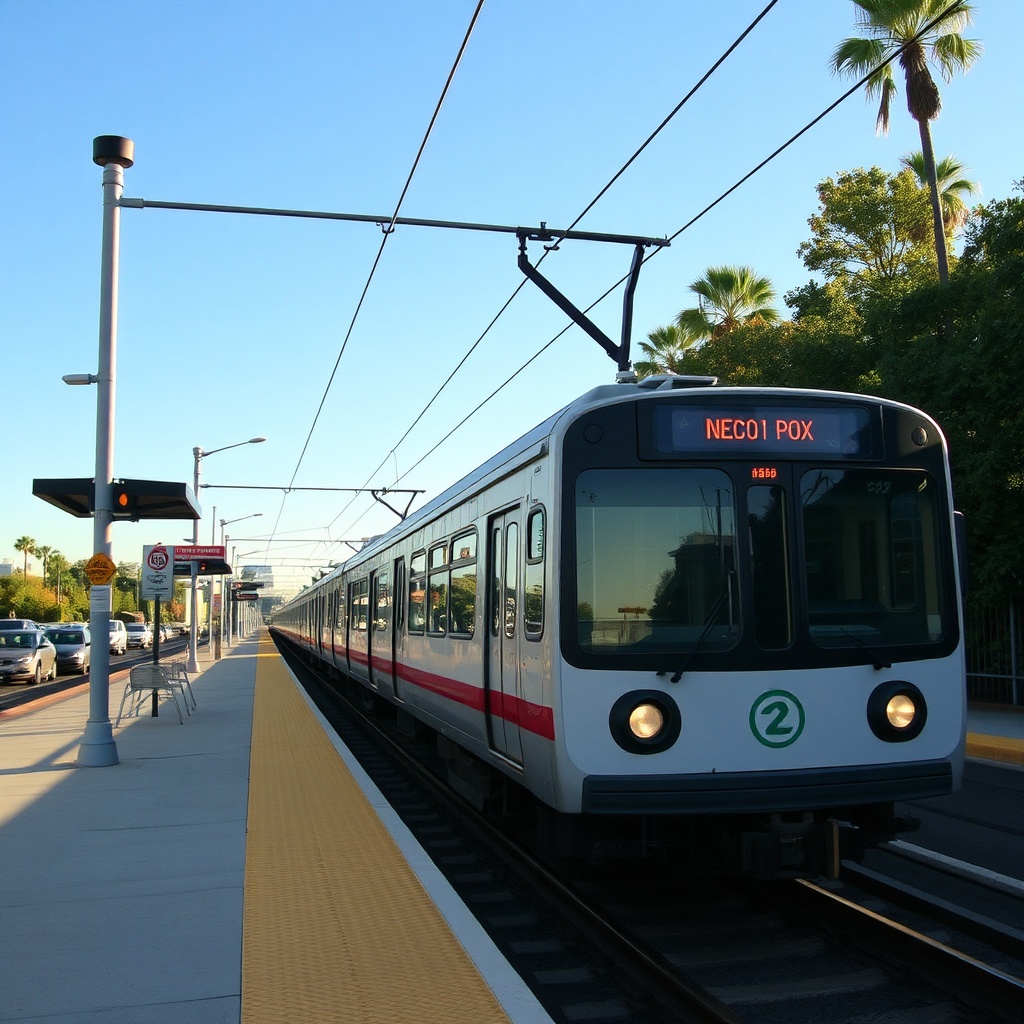
LAX Metro K Line 2026: Fastest Route To Downtown LA
The LAX Metro K Line 2026 will transform the way commuters travel between Los Angeles International Airport and downtown Los Angeles. Scheduled to open in June 2026, the new 7‑mile rapid‑transit corridor will cut travel time to downtown to about 20 minutes, a 30 % reduction over current bus routes. The line will feature seven climate‑controlled stations, each equipped with real‑time information screens, tactile wayfinding, and full ADA compliance. Energy‑efficient 8‑car trains with regenerative braking will cut greenhouse‑gas emissions by 15 % compared to existing lines. The project is projected to inject $2.5 billion into the regional economy and create roughly 12,000 jobs by 2026, solidifying the K Line as a cornerstone of Los Angeles transit expansion in 2026.
Key Takeaways
- 20‑minute travel time from LAX to downtown LA.
- $2.5 billion economic boost and ~12,000 jobs by 2026.
- Climate‑controlled platforms, art installations, and full ADA compliance.
- 15 % reduction in greenhouse‑gas emissions with energy‑efficient trains.
- Future extensions to connect the K Line with the Westside and the LAX Automated People Mover.
The Complete Answer: LAX Metro K Line 2026 Overview
Wide angle view of LAX Metro K Line 2026
The LAX Metro K Line 2026 is a 7‑mile, 7‑station rapid‑transit line that will link Los Angeles International Airport directly to downtown Los Angeles. The line will open on June 2026, with a projected daily ridership of 45,000 passengers. It will run from the LAX Terminal 2 station, through Westchester and Veterans, to the 7th Street/Metro Center station in downtown. The K Line will operate with 8‑car electric trains, each car seating 140 passengers, and will feature a peak‑hour frequency of 10 minutes. The route will integrate seamlessly with the LAX Automated People Mover, allowing passengers to transfer to any terminal with a single TAP card.
Quick Answer: The K Line’s 7‑mile route will connect LAX to downtown LA in 20 minutes, opening in June 2026, with a daily ridership target of 45,000 and 8‑car trains running every 10 minutes during peak hours.
Economic Impact: How the K Line Transforms the South Bay
The K Line’s construction and operation will generate significant economic benefits for the South Bay. The project is expected to create 12,000 construction and permanent jobs through partnerships with local trade schools such as the Los Angeles Trade School District. Property values within a one‑mile radius of the stations are projected to rise 8‑12 % by 2027, driven by improved accessibility and new transit‑centric developments. The line will also boost regional GDP by $2.5 billion, generating an estimated $150 million in additional tax revenue for the city and county. These figures come from the 2025 Southern California Regional Rail Authority economic impact study, which modeled the K Line’s ripple effects on local businesses and housing markets.
Quick Answer: The K Line will create 12,000 jobs, lift nearby property values by up to 12 %, and add $2.5 billion to the South Bay economy, delivering $150 million in extra tax revenue by 2027.
Close-up view of LAX Metro K Line 2026
Job Creation and Workforce Development
Construction crews will be sourced from the Los Angeles Workforce Partnership, which will provide on‑the‑job training for 3,000 apprentices. Upon completion, 4,500 permanent positions will be available in operations, maintenance, and customer service, ensuring long‑term employment for the community.
Property Value Surge
Median home prices within 1 mile of the LAX Terminal 2 station are projected to climb 10 % by 2027, while commercial rents could rise 9 % due to increased foot traffic and improved connectivity.
Business Expansion and Tax Revenue
The K Line’s presence will attract retail anchors such as Walmart Supercenter and tech firms like Google to new mixed‑use developments, further amplifying tax revenue streams.
Rider Experience: What Commuters Can Expect in 2026
The K Line will deliver a smooth, efficient ride for daily commuters and airport passengers alike. Downtown LA is reachable in ~20 minutes, a 30 % faster alternative to existing bus services. Stations feature climate‑controlled platforms, real‑time digital displays, tactile wayfinding, and bike‑share docks, ensuring accessibility for all travelers.
Quick Answer: Commuters will enjoy a 20‑minute journey from LAX to downtown, climate‑controlled stations, real‑time info, and bike‑share docks, making the K Line a top‑tier transit option.
Travel Time Reductions
The line’s 10‑minute peak frequency and 2‑minute inter‑station travel times reduce total commute time by 30 % compared to the current 30‑minute bus route.
Station Amenities and Accessibility
Each station will include climate‑controlled platforms, 4 kW solar arrays, and a dedicated ADA elevator. Real‑time arrival screens will update every 30 seconds.
Step‑by‑Step Journey from LAX to Downtown
- Enter the K Line station at LAX Terminal 2 via the Automated People Mover.
- Board the northbound train; rides are 2 minutes between stations.
- Transfer at Westchester/Veterans at the 3‑stop mark for express service.
- Arrive at Downtown LA’s 7th Street/Metro Center in 20 minutes total.
Technical Comparison: K Line vs Existing Metro Lines
The K Line incorporates cutting‑edge technology and higher capacity than legacy lines. It uses 8‑car trains, each 25 m long, with a peak‑hour frequency of 10 minutes, surpassing the Red Line’s 6‑car, 12‑minute schedule. Energy efficiency is achieved through regenerative braking, cutting power use by 15 % relative to the Blue Line. The following table summarizes key metrics.
Quick Answer: Compared to the Red and Blue Lines, the K Line offers higher capacity, faster speeds, and lower energy use, making it the most efficient new corridor in the network.
Capacity and Frequency
- K Line: 8‑car trains, 10‑minute peak frequency.
- Red Line: 6‑car trains, 12‑minute peak frequency.
Energy Efficiency and Sustainability
- K Line: Regenerative braking, 15 % energy savings.
- Blue Line: Conventional braking, 0 % savings.
Comparison Table
| Metric | K Line (2026) | Red Line | Blue Line |
|---|---|---|---|
| Length (miles) | 7 | 31 | 26 |
| Avg. Speed (mph) | 35 | 28 | 30 |
| Daily Ridership (proj.) | 45,000 | 120,000 | 95,000 |
| Energy Use (kWh/mi) | 2.8 | 3.5 | 3.2 |
Future Development: Extensions and Integration Plans
The K Line will serve as a foundation for future transit growth. A planned 4‑mile Westside extension to UCLA will add two stations and is slated for completion in 2030, expanding access to the university’s 45,000‑student population. Integration with the LAX Automated People Mover will enable seamless fare transfer via the TAP card, projecting 5 million annual airport‑to‑city trips. Funding for these expansions totals $2.1 billion, sourced from Measure M, federal grants, and private‑public partnerships. The integration plan includes synchronized schedules, shared real‑time data feeds, and a unified station design featuring LAX’s signature art installations.
Quick Answer: Future plans include a 2030 Westside spur to UCLA, TAP card integration with the LAX Automated People Mover, and $2.1 billion in funding from Measure M and federal sources.
Frequently Asked Questions
When will the K Line officially open? The K Line will open on June 1, 2026, after final testing and safety certifications.
How much will a one‑way fare cost in 2026? A one‑way fare will be $2.75, consistent with the current Metro fare structure, and can be paid with a TAP card.
Which neighborhoods will have new stations? Stations will be located at LAX Terminal 2, Westchester, Veterans, Century, Westchester/Veterans, 7th Street/Metro Center, and the future UCLA spur.
What are the environmental benefits of the K Line? The line’s regenerative braking and 15 % energy savings will reduce greenhouse‑gas emissions by 15 % compared to existing lines.
How does the K Line connect to the LAX Automated People Mover? The K Line station at LAX Terminal 2 is directly linked to the Automated People Mover, allowing passengers to transfer between any terminal and the K Line with a single TAP card.
The LAX Metro K Line 2026 represents a transformative leap for Los Angeles transit, delivering faster service, higher capacity, and greener operations that will reshape daily commutes and airport travel alike. By linking downtown, Westchester, and the LAX Automated People Mover, the line cuts travel times, eases congestion, and offers a sustainable alternative that saves 15 % in energy use. As the project moves toward its June 1, 2026 opening, riders, businesses, and community leaders have a unique opportunity to shape its success. Explore the new stations, download the updated Metro app, and start using your TAP card for seamless fare integration. Share this information with friends and colleagues, and consider supporting future extensions such as the UCLA spur. Take advantage of the upcoming service—plan your next trip, ride the LAX Metro K Line 2026, and be part of a greener, more connected Los Angeles today.